









Fiber Laser Cutting Trends: Why More Workshops Are Upgrading
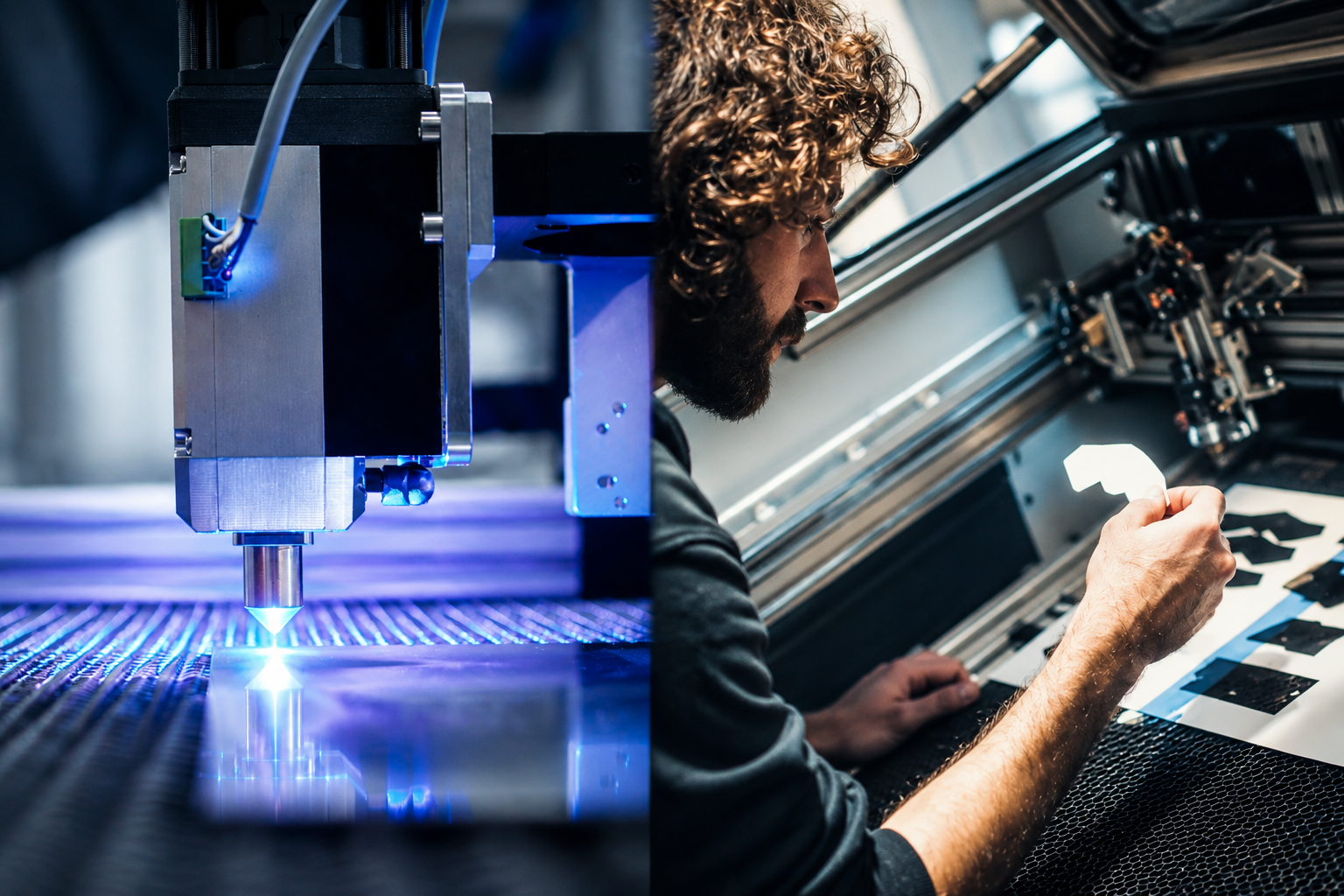
Fiber laser cutting is becoming one of the most important technologies in modern metal fabrication. More workshops, manufacturers, and industrial suppliers are upgrading their cutting systems because the market is moving toward faster production, better precision, lower operating costs, and more automated workflows.
This is not just a small trend. The global laser cutting machines market was valued at around USD 6.85 billion in 2025, and it is projected to grow to USD 18.43 billion by 2034, according to Fortune Business Insights. That shows strong long-term demand for laser cutting technology across manufacturing, automotive, machinery, electronics, and metalworking industries.
Why Fiber Laser Cutting Is Growing
One of the main reasons workshops are moving toward fiber laser cutting is efficiency. Compared with older cutting technologies, fiber laser systems are known for high cutting speed, strong beam quality, and lower maintenance requirements.
Another market report notes that fiber laser cutting machine growth is being driven by manufacturing automation and the advantages of fiber lasers compared with CO₂ systems, including higher cutting speeds, lower maintenance costs, and better energy efficiency.
For workshops, this matters because cutting is not only about the machine itself. It is about how many parts can be produced per shift, how stable the cutting quality is, how much downtime the machine has, and how much maintenance is required.
Higher Precision Is Becoming the Standard
Modern customers expect cleaner cuts, tighter tolerances, and less post-processing. Fiber laser cutting helps workshops meet these expectations because it can produce accurate cuts with a narrow kerf and strong repeatability.
This is especially important in industries where parts must fit precisely, such as machinery production, automotive components, metal furniture, electrical cabinets, and industrial equipment.
As more workshops compete on speed and quality, precision is no longer a luxury. It becomes a requirement.
Automation Is Changing Laser Cutting
Another major trend is automation. Many modern laser cutting systems are now connected with automatic loading and unloading systems, nesting software, production monitoring, and smart factory workflows.
Future Market Insights projects the laser cutting machines market to grow from USD 6.9 billion in 2025 to USD 14.3 billion by 2035, with solid-state lasers expected to hold a large share of the market.
This shows that workshops are not only buying cutting machines. They are investing in more complete production systems. A laser machine becomes part of a larger workflow where material handling, software, maintenance, and spare parts all affect productivity.
Why Component Quality Matters More
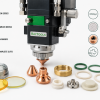
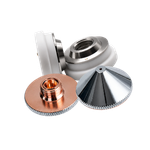
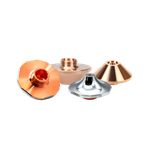
As machines become faster and more powerful, small components become even more important. A fiber laser system depends on stable optics, correct gas flow, clean protective windows, reliable nozzles, and well-maintained cutting head parts.
A worn nozzle, damaged protective window, dirty lens, or poor sealing ring can affect cutting quality quickly. Even if the machine itself is advanced, weak maintenance parts can create problems such as:
rough cutting edges
unstable cuts
increased dross
burn marks
loss of cutting efficiency
more downtime
higher replacement costs
This is why workshops that upgrade to better laser systems also need to take maintenance more seriously.
Energy Efficiency and Lower Operating Costs
Energy efficiency is another reason fiber laser systems are attractive. In many production environments, operating cost matters as much as machine speed. Fiber lasers are often promoted for lower power consumption and reduced maintenance compared with older systems.
For workshops running machines every day, even small improvements in energy use, cutting speed, and downtime can have a large effect over time.
What This Means for Workshops
The trend is clear: laser cutting is moving toward faster, smarter, and more automated production. Workshops that want to stay competitive are upgrading because customers expect better quality, shorter lead times, and more consistent results.
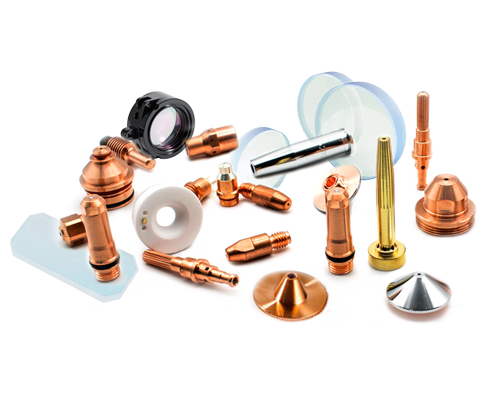
But upgrading the machine is only one part of the process. To keep a laser cutting system reliable, workshops also need the right spare parts and consumables.
That includes:
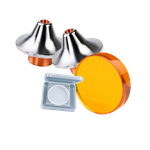
protective windows
ZnSe lenses
mirrors
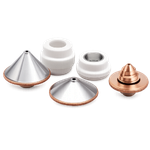
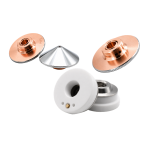
nozzles
ceramic rings
silicone sealing rings
cutting head components
cleaning and maintenance parts
Final Thoughts
Fiber laser cutting is growing because it helps manufacturers produce faster, cleaner, and more accurate parts. Market reports show strong growth for laser cutting machines over the next decade, driven by automation, precision manufacturing, and demand from industrial sectors.
For workshops, the opportunity is clear. Better machines can improve productivity, but only if they are maintained correctly. High-quality components and regular replacement of worn parts are essential for keeping the laser system stable.
At Kamiteka, you can find laser cutting components, optics, sealing rings, nozzles, mirrors, and related parts for professional machine maintenance.